
Blog
|
Learn
What is a PTA? Guide to Parent Teacher Associations
Learn what PTA stands for, what a PTA does, and how parents can get involved to support their child’s school through programs, meetings, and community activities.
On this page:
When it comes to supporting schools, few organizations have had a bigger impact than the PTA. Yet many parents aren’t sure what the PTA actually is, how it works, or why it matters.
In this guide, we’ll cover everything you need to know: what the PTA stands for, how it’s organized, what happens at meetings, common roles you can take on, and how to join. Whether you’re a first-time parent or looking to get more involved, this is your starting point.
What is a PTA?

A PTA is a school based organization made up of parents, teachers, and school staff who work together to support students and strengthen the school community.
It exists to give families a structured way to be involved in their child’s school. Instead of parent involvement happening randomly or informally, the PTA provides leadership roles, regular meetings, voting procedures, and clear goals so that efforts are organized and focused.
At its core, a PTA creates a partnership between families and educators. It gives parents a voice, allows schools to communicate directly with families, and builds a system for collaboration that supports students throughout the year.
While every school’s PTA operates a little differently, the purpose remains consistent: bring families and schools together in a coordinated way that benefits students.
What does PTA stand for?

PTA stands for Parent Teacher Association. It is a nationwide nonprofit organization that brings parents, teachers, and school staff together to support the educational success and well-being of children.
The National PTA was founded in 1897 with a straightforward mission: every child deserves a strong voice in their education, and families and schools working together can create better outcomes for all students. Since then, it has grown into one of the largest child advocacy organizations in the United States.
What does a PTA do?

Most PTAs organize events that bring families onto campus, such as school fundraisers, science nights, book fairs, and community gatherings.
PTAs also raise money to support needs that may fall outside the regular school budget. That can include classroom supplies, in-school STEM labs, field trips, assemblies, enrichment programs like STEM clubs, campus improvements, or teacher appreciation efforts.
In many schools, the PTA coordinates volunteers, helps communicate updates through newsletters or social media, and supports school leadership with practical needs throughout the year.
The PTA turns parent involvement into tangible programs, resources, and experiences that directly impact students.
PTA programs and activities
One of the most visible roles a PTA plays is bringing programs and activities to campus. These efforts support students academically, socially, and emotionally, while also building a stronger school community.
Common PTA programs and activities include family events such as science nights, book fairs, cultural celebrations, and movie nights that bring families together. Many PTAs also promote educational enrichment classes like art, music lessons, STEM programs, and tutoring that go beyond what the regular school budget can cover.
PTAs often support teachers as well, providing classroom supply grants, hosting appreciation events, and offering other practical resources. Some focus on health and safety by promoting healthy habits, nutrition, mental wellness, or campus improvements. Others organize community service projects that give students and families the chance to give back locally.
Whether it is funding new library books or hosting a family science night, PTA programs give families a direct way to shape the experiences students have at school.
PTA vs. PTO vs. PTSA
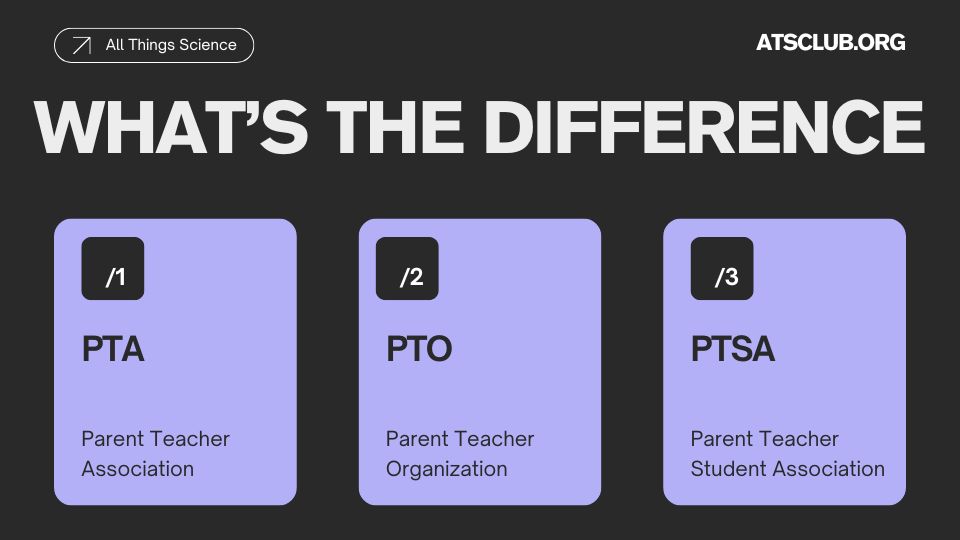
If you’ve spent time around schools, you’ve probably heard the terms PTA, PTO, and PTSA used almost interchangeably. They all support students and schools, but there are a few key differences.
A PTA, or Parent Teacher Association, is part of the National PTA. That means local PTAs are connected to a larger nonprofit network and have access to state and national training, resources, and advocacy. In return, they follow certain guidelines and pay membership dues.
A PTO, or Parent Teacher Organization, is independent. It is not connected to a national organization and sets its own structure, rules, and priorities. This can offer more flexibility, though it does not include the same built in support system that a PTA provides.
A PTSA, or Parent Teacher Student Association, is similar to a PTA but includes students as active members. This model is more common in middle and high schools, where students can take on leadership roles and have a voice in school decisions.
In the end, the choice often depends on whether a school prefers the structure and broader connection of a PTA or the independence of a PTO.
What is a PTA meeting
Many parents are curious about PTA meetings but hesitate to attend because they are not sure what to expect. In reality, most PTA meetings are relaxed and welcoming. Parents, teachers, and school staff come together to share updates, plan activities, and talk through ways to support students.
A typical meeting often starts with school updates. The principal or teachers may share news about upcoming events, school needs, or district changes. From there, the group usually moves into planning. Members discuss ideas for family nights, fundraisers, after school programs, and other activities that bring the community together.
Budget conversations are also common. The group reviews how money has been raised and talks through how it should be spent to best support students and teachers. There is usually time for open discussion as well, where parents can ask questions or suggest new ideas.
You do not need to join a committee or take on a leadership role just to attend. Showing up, listening, and contributing when you can is enough. PTA meetings are one of the simplest ways to stay informed, meet other families, and get involved at your school.
PTA bylaws
Every PTA operates under a set of bylaws. These are simply the basic rules that explain how the organization runs, makes decisions, and stays focused on its mission.
PTA bylaws usually outline how meetings are conducted, including when they are held and how decisions are made. They also define leadership roles such as president, treasurer, and secretary, and explain what each position is responsible for.
They cover who can become a member, how voting works, and how important decisions are approved. Financial guidelines are included as well, helping ensure that fundraising and spending are handled responsibly and transparently.
Bylaws are not meant to make the PTA feel overly formal. They exist to keep things organized and fair. Most parents do not need to know every detail unless they plan to take on a leadership role. For everyone else, it is enough to know there is a clear structure in place supporting the school community.
PTA roles
PTAs run on a combination of leadership and everyday volunteers. Some parents take on official positions, while others help out where they can.
The PTA president typically leads meetings, sets goals for the year, and works closely with school administration.
The vice president supports that work and may oversee specific committees or projects.
The treasurer manages the budget, tracks fundraising, and handles financial reporting. The secretary keeps meeting notes and helps with communication.
Beyond those core roles, committee chairs often lead focused efforts like event planning, fundraising campaigns, or membership drives. And of course, volunteers make everything possible by helping at events, pitching in when needed, or simply staying involved and informed.
You might hear the phrase “PTA mom,” but PTAs are not limited to one type of parent. Fathers, grandparents, guardians, and other family members are all welcome. Whether you take on a leadership role or just show up when you can, every contribution helps strengthen the school community.
How to join your school’s PTA

Joining your school’s PTA is usually straightforward, and you can be involved at whatever level fits your schedule.
Most schools share PTA membership information at the beginning of the year. You can ask the front office or check the school website for details. From there, it typically involves filling out a short membership form, either on paper or online, and paying a small membership fee. Those dues go directly toward supporting programs and activities at the school.
Once you join, you will usually be added to an email list or messaging group so you can stay informed about meetings, events, and volunteer opportunities.
Becoming a member does not mean you are signing up for every meeting or event. You decide how involved you want to be. Even simply joining and showing support helps your PTA continue its work for students and families.
PTA benefits with All Things Science

If your PTA is looking for new ways to support students and families, All Things Science provides hands on STEM programs through after school clubs, in school labs, and summer programming.
All Things Science works directly with schools and PTAs to create engaging experiences that help students think and problem solve like real scientists and engineers.
STEM programs cover topics such as robotics, rocketry, biology, chemistry, circuits, and more. All Things Science brings the instructors, curriculum, and materials directly to elementary and middle school campuses, making it simple for PTAs and schools to offer high quality STEM enrichment without adding extra work to their plate.
PTA FAQ
What does PTA mean in school?
In a school setting, PTA refers to a volunteer organization that helps organize events, raise funds, and support programs that benefit students and teachers.
Is joining the PTA required?
No. PTA membership is completely voluntary. Parents can choose how involved they want to be.
How much are PTA membership dues?
Dues vary by school, but they are usually low and help fund student programs, events, and classroom support.
Who can join a PTA?
PTAs welcome parents, guardians, grandparents, teachers, and school staff. Anyone interested in supporting the school community can typically join.
Can you attend a PTA meeting without being a member?
In many schools, yes. Meetings are often open to families, though voting rights may require membership.
What is the difference between PTA dues and fundraising?
Membership dues support the organization itself, while fundraising events raise additional money for school programs and initiatives.
Hands-on STEM for parents and schools
Give your students access to great after-school STEM programs year-round
Get started ➔



.jpg)
Take a Look at our Featured Articles
Dive into the vibrant world of STEM through articles from your favorite scientists and engineers, all in one place.




Join the 1000+ families enrolled in All Things Science
Tell us where to send you some free STEM resources today.


