
Blog
|
Learn
What is STEM? Guide to STEM Education in Schools
Learn what STEM education is, how it works in schools, and why it matters for kids. Explore how hands-on STEM programs help students get started.
On this page:
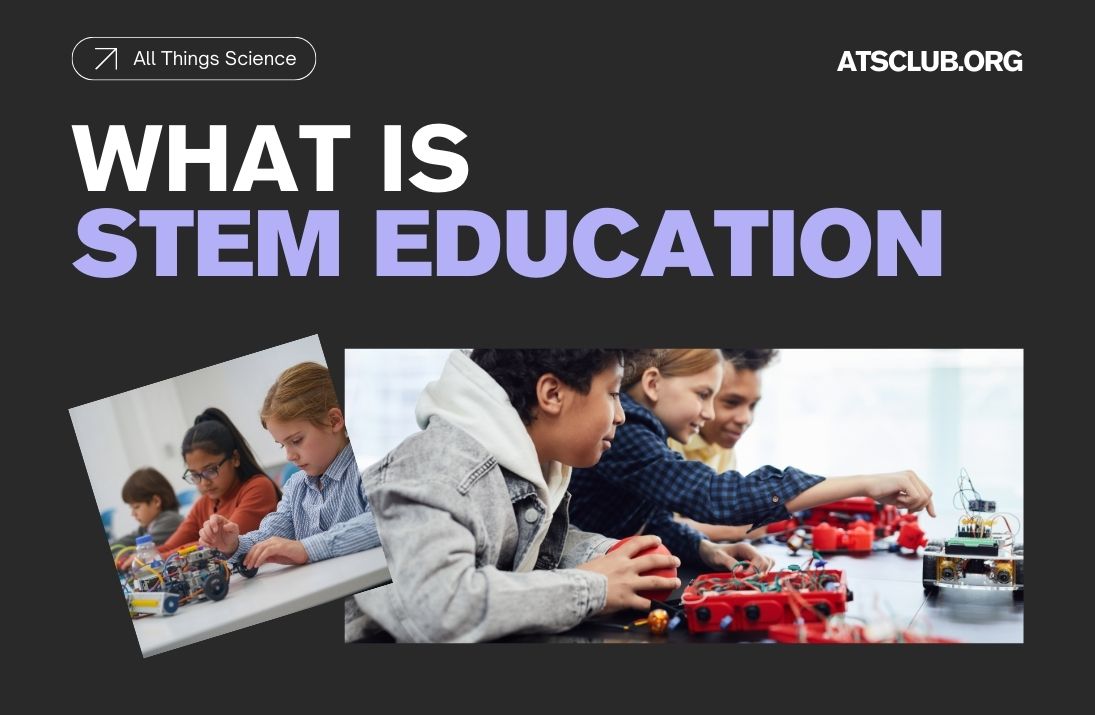
STEM has become a common term in schools, enrichment programs, and conversations among parents, but it is not always clear what it really means or why it matters.
As technology continues to shape how we learn, work, and solve problems, the way students are introduced to science, technology, engineering, and math is changing. Hands-on learning and real-world problem-solving are becoming just as important as traditional classroom instruction.
With so many options available, families and schools are often left wondering what STEM education programs actually looks like in practice, where to start, and how to choose the right approach.
This guide breaks down what STEM education is and the different forms it takes, from classroom instruction and after-school programs to STEM camps and hands-on activities, helping you make informed decisions that allow students to get involved at any age.
What does STEM stand for?
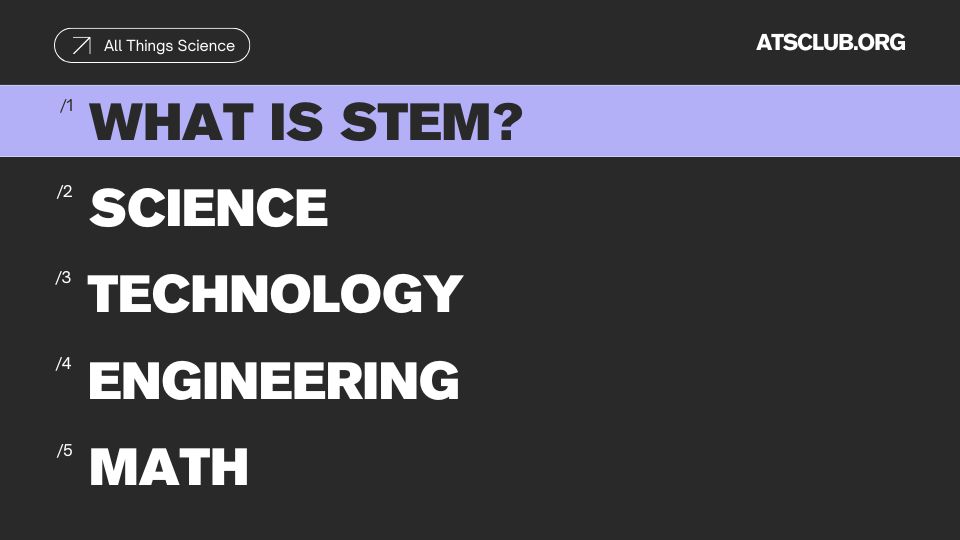
STEM stands for Science, Technology, Engineering, and Math. The term describes an approach to education that treats these four subjects as connected areas of learning rather than separate classes taught in isolation.
Here is a simple breakdown of what STEM means:
- Science helps students understand the natural world through observation, experimentation, and asking questions.
- Technology focuses on using tools, software, and systems to solve problems and create solutions.
- Engineering teaches students how to design, build, test, and improve ideas or products.
- Math provides the skills needed to measure, analyze data, recognize patterns, and support logical thinking.
Instead of treating science, math, and technology as standalone subjects, STEM learning brings them together through hands-on projects and activities that reflect how these skills are used in the real world.
What is STEM education?

STEM education is an approach to learning that combines science, technology, engineering, and math through hands-on experiences.
STEM education often emphasizes the use of Next Generation Science Standards (NGSS) to guide instruction.
Unlike older science standards that focused heavily on memorizing facts, NGSS emphasizes how students learn science, not just what they learn. The goal is to help students think and act like scientists and engineers by asking questions, testing ideas, and explaining their reasoning.
NGSS is built around three core components:
- Science and Engineering Practices: Focus on what students do, such as experimenting and designing
- Crosscutting Concepts: Highlight big ideas that apply across science, like patterns and cause and effect
- Disciplinary Core Ideas: Cover key concepts in life science, physical science, earth science, and engineering
STEM education programs typically use a combination of teaching approaches.
- Inquiry-based learning encourages students to ask questions and investigate answers rather than receive information upfront.
- Project-based learning allows students to learn by working on longer-term projects that solve problems or address real-world questions.
In a STEM-focused environment, students learn through real-world concepts, hands-on projects, and experiments that make learning exciting.
STEM education in schools
STEM education in schools is still growing, and approaches can vary widely. In most cases, when STEM is implemented in schools, it means there is dedicated time within the school day for project-based learning and hands-on activities.
This may include conducting science experiments to explore concepts like acid-base reactions or working on engineering projects that teach students how to harness solar energy by designing and building a DIY solar oven. These activities naturally combine multiple subjects into a single learning experience.
Some schools place a stronger emphasis on this approach and are often referred to as STEM schools or STEM academies. Others integrate STEM learning through specific classes, after-school programs, or in-school STEM labs. Both approaches can be effective when learning remains active and engaging.
STEM vs. STEAM education
Another common acronym used alongside STEM is STEAM. STEAM includes the same foundation of science, technology, engineering, and math, with the addition of art.
While the difference may sound small, how STEAM is applied in schools can vary widely. STEAM education typically places more emphasis on creativity, design, and artistic expression alongside technical skills. Both STEM and STEAM share the same goal of hands-on, meaningful learning.
In some cases, STEAM curriculum can lean too heavily toward arts and crafts rather than hands-on science and engineering projects. For this reason, many schools and programs choose to blend elements of both approaches instead of committing strictly to one.
You may also see dedicated spaces for this type of learning, often called STEAM labs, makerspaces, or innovation labs.
Read more: STEAM vs STEM
Why STEM education matters
As technology continues to shape nearly every industry, it has become increasingly important for students to develop strong STEM literacy. These skills help students learn, adapt, and solve problems in both the real world and the workplace.
STEM education matters because it prepares students for future careers in a fast-changing world. When schools and families emphasize STEM learning, students are better equipped to navigate new technologies, shifting industries, and complex challenges. These skills support success whether students pursue STEM careers or choose a completely different path.
STEM learning benefits
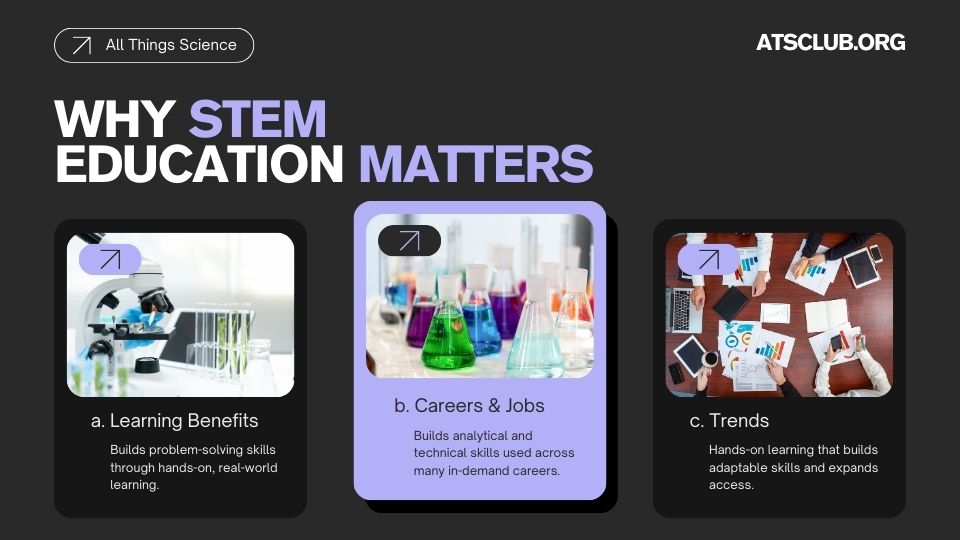
The benefits of STEM learning start early and continue as students progress through school. Hands-on STEM experiences help students stay engaged and motivated, especially when learning feels connected to real-world problems.
Some key benefits of STEM education include:
- Stronger problem-solving and critical thinking skills
- Greater confidence in math and science
- Increased creativity and innovation
- Improved collaboration and communication skills
STEM education also helps students become comfortable tackling problems without immediate answers. Instead of being discouraged by challenges, students learn to ask questions, test ideas, and improve their thinking over time.
This mirrors how problem-solving works in the real world, where solutions are rarely simple. By learning to work through uncertainty and apply knowledge in practical ways, students become more adaptable learners. These skills are valuable in school, future careers, and everyday life.
STEM careers and jobs
One reason STEM education receives so much attention is its connection to future career opportunities. STEM careers span a wide range of industries, including healthcare, engineering, technology, environmental science, and research.
Jobs that involve STEM skills include software development, engineering, data analysis, scientific research, healthcare technology, and many others.
STEM majors and STEM degrees help prepare students for these paths by building a strong foundation in analytical thinking and technical skills. As demand continues to grow, job opportunities in STEM fields are expected to remain strong, making STEM education an important early stepping stone.
STEM education trends
STEM education continues to evolve as schools and programs adapt to new technologies and changing workforce needs. There is a growing focus on hands-on learning, real-world problem-solving, and interdisciplinary projects that blend multiple subjects.
There is also increased emphasis on supporting girls and women in STEM fields through early exposure, mentorship, and scholarships. More schools, organizations, and companies are investing in initiatives that encourage girls in STEM and support young women pursuing STEM majors and STEM degrees across a wide range of STEM fields.
As STEM education continues to expand, the focus is shifting away from preparing students for a single career and toward building adaptable skills that will remain valuable in a rapidly changing world.
Types of STEM education programs
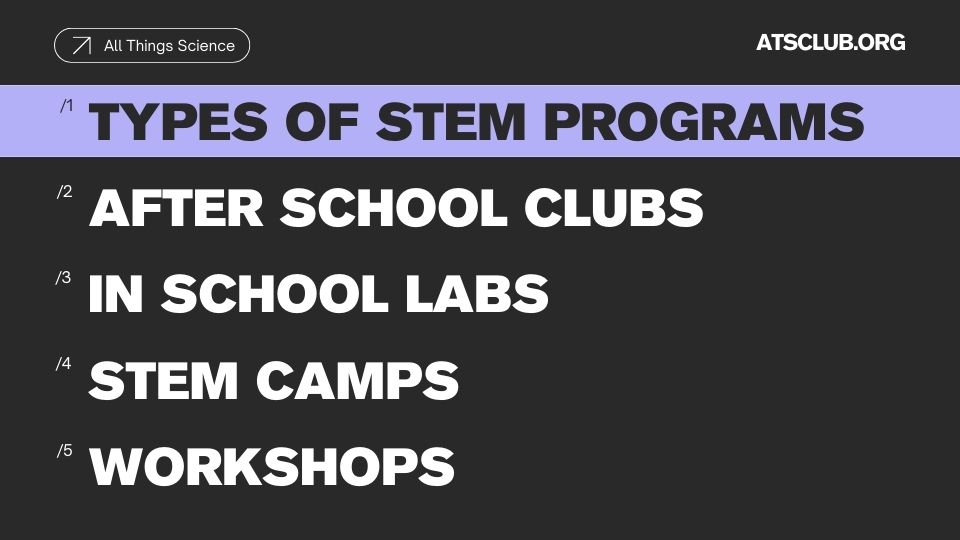
STEM education programs come in many formats, each designed to support different schedules, learning environments, and goals. While the focus is always on hands-on learning in science, technology, engineering, and math, the structure of a program can shape the overall experience.
Today, STEM education is commonly offered in school classrooms, after-school programs, and STEM camps, giving families and schools flexibility in how and when students engage with STEM learning.
Understanding the different types of STEM education programs can help families and schools find the option that best fits their students’ needs.
After-school STEM programs
After-school STEM programs give students the opportunity to explore STEM subjects beyond the regular school day. These programs are often offered on campus and focus on hands-on projects, group collaboration, and applied learning.
Students participating in after-school STEM clubs have the chance to engage in engineering challenges, coding activities, and science experiments over multi-week sessions with classmates at their school.
After-school STEM programs are especially popular with families looking for consistent enrichment and with schools seeking structured STEM programs for kids.
In-school STEM programs
In-school STEM programs are integrated into the school day and align closely with academic standards and curriculum goals. These programs may take the form of dedicated STEM classes, rotating STEM labs, or project-based units embedded within science and math courses.
In-school STEM education programs help reinforce classroom learning while giving students more opportunities to apply STEM concepts through experiments, design challenges, and real-world problem solving.
STEM camps
STEM camps offer an immersive learning experience, often held during school breaks or over the summer. STEM summer camps typically run for one or more weeks, Monday through Friday, and focus on a specific theme such as robotics, engineering, chemistry, or technology.
Families can usually find STEM camps during summer break at school campuses, community and learning centers, or local parks and recreation facilities.
Summer STEM programs are a great way for kids to stay engaged while school is out and explore more specialized topics, including space, rocketry, robotics, coding, and other hands-on STEM subjects.
STEM workshops
STEM workshops are shorter programs designed to introduce students to a specific topic or skill. These typically take place as single-day classes or weekend sessions and often focus on one STEM subject or project.
Workshops are a good option for students who want to explore a new interest or for schools and organizations looking to offer flexible STEM learning opportunities.
Online STEM programs
Online STEM programs allow students to participate in STEM learning from home. These programs may include virtual classes, guided projects, or interactive lessons that cover STEM subjects such as coding, science, or engineering concepts.
While online STEM programs can offer flexibility and access, many families choose to balance them with in-person STEM classes or labs to ensure students still get hands-on, collaborative student experiences.
How to choose a STEM education program
Choosing a STEM education program can feel overwhelming with so many options available. The right program should match your child’s age and experience level, support their interests, and emphasize hands-on projects that lead to meaningful learning.
Instead of looking for a one-size-fits-all solution, focus on how the program approaches learning and whether its activities align with your child’s needs.
Match the program to your child’s age and experience
STEM education programs should be designed with specific age groups in mind. Preschoolers and younger elementary students benefit from exploration and inquiry-based learning, such as building with LEGO STEM kits or experimenting with simple machines.
Older elementary and middle school students are often ready for more advanced STEM projects, including designing systems, testing variables, or presenting their work on a STEM fair board. Programs should clearly explain the grade levels they serve and how activities are adapted for different skill levels.
STEM education is valuable at every age. Strong STEM programs encourage kids to ask questions, try new ideas, and enjoy learning alongside their peers.
Look for hands-on STEM projects and activities
When choosing a STEM education program, the types of projects and activities students work on are one of the most important factors to consider.
Ask whether the program uses real, NGSS-aligned learning experiences or relies mostly on STEM toys, games, or screen-based activities. Strong STEM programs give students the opportunity to work through hands-on projects and experiments that reflect real-world problems and encourage active participation.
The best STEM activities make learning feel natural and engaging. Students learn by building, experimenting, and solving problems, either independently or with others. Creating something, testing ideas, and figuring out how things work helps students develop deeper understanding and confidence.
Good science and engineering can be a little messy. Working with real materials and supplies allows students to explore concepts in a meaningful way rather than just watching videos or listening to lectures.
Check the curriculum and focus areas
Not all STEM programs cover the same subjects. Some place more emphasis on science and experimentation, while others focus on engineering, coding, robotics, or technology.
Look for a program that aligns with your child’s interests or introduces them to new STEM subjects in a balanced way. A clear curriculum or learning framework is a strong indicator that the program is well designed and intentional.
Consider instructor experience and support
The quality of a STEM program often depends on the instructors leading it. Experienced educators who know how to teach STEM concepts at different ages can make a meaningful difference in how students engage and learn.
Programs that go beyond premade STEM kits and offer guided, hands-on learning with real materials tend to be more effective. Working with actual circuit components, engineering materials, or chemistry supplies allows students to engage more deeply and better understand the concepts being taught.
Strong STEM education programs also provide clear guidance and structure while encouraging collaboration and experimentation. When students feel supported, they are more confident asking questions, trying new ideas, and learning alongside their peers.
Think about format and schedule
Finally, consider how the program fits into your family or school schedule. Some students thrive in after-school programs, while others prefer camps, workshops, or in-school options.
The best STEM education program is one that students can attend consistently and enjoy over time.
How to get started with STEM Education
Getting started with STEM education does not have to be complicated. The best first step is simply creating opportunities for kids to explore, build, and ask questions in ways that feel fun and approachable.
For parents and guardians
Start small. This might mean trying a simple STEM activity at home, signing up for an after-school STEM program at your child’s school, or enrolling in a STEM camp during summer break. Looking for STEM programs near you or reaching out to a local STEM organization to request programs at your school can help ensure students get early exposure and consistent access to STEM learning throughout the year.
For schools and educators
Getting started with STEM education does not require major curriculum changes. Many states and districts offer funding that allows schools to partner with local STEM education providers to bring hands-on STEM learning into classrooms through in-school STEM labs and after-school programs that complement existing instruction.
When choosing a STEM partner, look for programs that align with NGSS and use inquiry-based or project-based learning. Clear lesson plans and hands-on materials help students explore real-world problems while supporting academic standards.
Partnering with an established STEM education company also gives schools access to a fully equipped STEM department without adding extra managerial or instructional workload. This allows schools to expand STEM offerings for students and families in a sustainable way.
Get started with All Things Science
If you are looking for structured, in-person STEM programs taught on your school’s campus, organizations like All Things Science partner directly with schools and families to deliver hands-on STEM education. Programs are offered through after-school programs, in-school STEM labs, and seasonal STEM camps, all designed to fit naturally into a school community.
These programs focus on making STEM education accessible, engaging, and age appropriate for elementary and middle school students, with an emphasis on real-world projects, inquiry-based learning, and hands-on experimentation.
No matter where you begin, the goal is the same. Give students the opportunity to explore how science, technology, engineering, and math connect to the world around them, just as real scientists and engineers do every day.
STEM education FAQ
What is STEM education?
STEM education is an approach to learning that integrates science, technology, engineering, and math into hands-on, real-world experiences. Instead of teaching each subject separately, STEM education connects them through projects, experiments, and problem-solving activities.
What does STEM stand for in education?
In education, STEM stands for Science, Technology, Engineering, and Math. These subjects are taught together to help students understand how ideas connect and how learning applies outside the classroom.
What is a STEM school?
A STEM school is a school that emphasizes science, technology, engineering, and math through hands-on, project-based learning. STEM schools often integrate these subjects across classes rather than teaching them in isolation.
What is STEM learning?
STEM learning is a hands-on approach to education where students learn science, technology, engineering, and math by exploring, building, and solving real-world problems instead of memorizing information.
What is the goal of STEM education?
The goal of STEM education is to help students develop critical thinking, creativity, and problem-solving skills. STEM learning encourages students to ask questions, test ideas, and learn by doing, rather than memorizing information alone.
What age should kids start STEM education?
Kids can start STEM education as early as preschool. Simple STEM activities like building, sorting, experimenting with water, or exploring cause and effect help young children build curiosity and confidence. As students grow, STEM education becomes more structured and project based.
What subjects are included in STEM education?
STEM education includes science, technology, engineering, and math. These subjects may appear as experiments, coding activities, engineering builds, data analysis, or applied math, often combined within a single project or lesson.
Are STEM programs only for students interested in science or engineering?
No. STEM education benefits all students, not just those who plan to pursue STEM careers. The skills developed through STEM learning, such as problem-solving, collaboration, and logical thinking, are useful across all subjects and career paths.
What are examples of STEM education programs?
Examples of STEM education programs include in-school STEM classes, after-school STEM programs, STEM labs, workshops, and STEM summer camps. These programs vary in format but share a focus on hands-on learning and real-world application.
Is STEM education important for future careers?
STEM education helps students build skills that are increasingly valuable in today’s workforce. While not every student will pursue a STEM career, STEM learning supports adaptability, technical literacy, and problem-solving skills that apply to many jobs and industries.
Hands-on STEM for parents and schools
Give your students access to great after-school STEM programs year-round
Get started ➔


.jpg)
Take a Look at our Featured Articles
Dive into the vibrant world of STEM through articles from your favorite scientists and engineers, all in one place.


Join the 1000+ families enrolled in All Things Science
Tell us where to send you some free STEM resources today.


