
Blog
|
Learn
7 Best Summer Camps for Kids in 2026
This comprehensive guide to the 7 best summer camps will help you make the most informed choice for your child's summer.

On this page:
Choosing a summer camp is an important decision. You want to find a program that matches your child's interests, fits your budget, and provides a safe, enriching environment during the summer months.
But as you start researching options, the sheer number of choices can be overwhelming. What activities matter most? How do you compare different camp types? What should you prioritize based on your child's age and developmental stage?
This article compares the top 7 summer camps for kids across different categories and specialties. Take a look at the activities and pricing of these popular programs, and consider your child's interests and your family's needs as you review each option.
What is a summer camp?
A summer camp is a supervised program designed to provide children and teenagers with enriching experiences during summer break. The best summer camps combine structured activities, skill development, and social interaction in a safe, engaging environment.
The 7 best summer camps for kids
1. All Things Science

All Things Science is a STEM education organization that hosts summer STEM camps at local elementary, middle, and K–8 schools. Camps are built around specific STEM subjects and emphasize hands-on experiments and engineering projects rather than general camp activities.
Summer Camp Details
How it works: Students attend camp Monday through Friday in one-week sessions held directly on school campuses.
Camp times: Core camp hours typically run from 8:00 AM to 12:00 or 12:30 PM.
Grade levels/ages: Programs serve students in grades K–8 (ages 5–14). Students are grouped by grade level so activities and instruction are tailored to age-appropriate skills and concepts.
Summer Camp Activities
All Things Science focuses on subject-specific STEM programs such as rocketry, robotics, 3D printing, electrical engineering, chemistry, and biology. As a STEM-first organization, the program emphasizes in-depth projects that mirror real scientific and engineering processes. Students build and launch rockets, program robots, design and print 3D models, conduct chemistry experiments, and work through structured engineering challenges each day.
How much is All Things Science summer camp?
Approximately $375 for a full-week summer camp, depending on location and program.
Benefits and Drawbacks
Benefits: Strong focus on STEM subjects rather than general enrichment. Curriculum is grade-specific and designed to build skills progressively throughout the week. Projects are hands-on and experiment-driven, with students actively building, testing, and problem-solving. Camps are led by experienced instructors familiar with STEM instruction.
Drawbacks: Camps are half-day programs, which may not work for families needing full-day childcare. Programming is intentionally focused on STEM, so families looking for a mix of sports, crafts, and free play may prefer a general day camp.
Parent Rating: Approximately 4.5–5.0 stars, with consistently strong feedback for hands-on projects and instructor engagement.
Best for: Families looking for a focused STEM summer camp where students spend their time building, experimenting, and learning through real science and engineering projects rather than general camp activities.
2. YMCA

The YMCA operates summer camps at community centers nationwide. Their day camps focus on character development and traditional activities, making them one of the most consistent and accessible options for families looking for reliable summer childcare.
Summer Camp Details
How it works: Kids attend camp Monday through Friday during one-week sessions that run from June through August at YMCA community centers (not school locations). Most locations offer extended care as early as 6:30 AM and as late as 6:00 PM.
Camp times: Typically 8:00 AM to 4:00 PM for core camp hours, with optional before and after care.
Grade levels/ages: Most programs serve kids in grades K-8 (ages 5-13). Some locations also offer camps for preschoolers (ages 3-4) and leadership programs for teens.
Summer Camp Activities
The YMCA offers a wide range of activities including swimming, sports, general play, and crafts. They incorporate STEAM activities as short rotations alongside their primary offerings. While STEAM stands for STEM plus Arts, parents find the curriculum leans heavily toward arts and crafts rather than unique STEM lessons taught by specialized instructors. Based on parent reviews, some families note that activities resemble those typically found in traditional daycare settings
How much is YMCA summer camp?
Between $290-$350 per week depending on membership status. Extra fees apply for extended care and swim lessons, plus a non-refundable registration fee of $40-50 per child.
Benefits and Drawbacks
Benefits: The YMCA excels as a traditional childcare option for working parents who need summer coverage from a long-standing, trusted organization. Great for parents who aren't looking for a specialized camp and want their kids to have a little mix of everything during the day.
Drawbacks: Since the YMCA operates as a community center first, parents won't find specialized instruction like they would at dedicated art, sports, or STEM camps. The wide age range (5-13) means activities are more general in nature, with STEAM activities heavily focused on crafts rather than specialized STEM programs.
Parent Rating: Approximately 2.5–4.5 stars depending on location, with summer camp–specific reviews tending to be more mixed.
Best for: Families who need local summer childcare with broad activities at a trusted community organization and aren't specifically looking for focused STEM education.
3. Boys and Girls Club

Similar to the YMCA, Boys & Girls Clubs of America operates learning centers nationwide, but with fewer amenities and offerings. Their camps focus on affordability and accessibility for working families.
Summer Camp Details
How it works: Kids attend camp Monday through Friday during one-week sessions from June through August at Boys and Girls Club community centers.
Camp times: Typically 8:00 AM to 6:00 PM, with extended care available at most locations.
Grade levels/ages: Most programs serve kids in grades K-8 (ages 6-13), with some teen programs for ages 14-18.
Summer Camp Activities
Boys & Girls Clubs offer traditional camp activities like sports, dance, chess, crafts, outdoor games, and field trips. STEAM projects are incorporated into weekly themes with a heavy emphasis on craft-based projects. In many locations, STEAM activities rely on third-party curriculum providers or pre-packaged STEM kits. As a result, the depth of instruction and staff specialization can vary by site and program.
How much is Boys & Girls Club summer camp?
Around $250 per week depending on location. Most require an annual membership fee ($25-$40).
Benefits and Drawbacks
Benefits: One of the most affordable camp options with strong financial assistance programs supporting a wide age range of students. Meals and snacks are included at most locations. Wide range of activities like crafts, outdoor games, and field trips allow students to experience variety during the day.
Drawbacks: Primarily operates as a childcare-focused organization, with enrichment activities designed to appeal to a wide range of ages. STEAM projects are often delivered through pre-built kits or third-party programs, which means activities tend to be more craft-based and vary by location. Because camps typically serve a broad age range (6–13+), instruction is more generalized rather than tailored to specific grade levels, functioning more like a traditional summer childcare program than a subject-focused educational camp.
Parent Rating: Approximately 2.7–3.1 stars on average, with experiences varying by site.
Best for: Families seeking the most affordable summer childcare with meals included, particularly those needing financial assistance.
4. Right At School (RAS)

Right At School, LLC is a for-profit company that runs summer camps directly on school campuses. These are similar to their before and after school programs during the regular academic year, but with longer hours and additional activities.
Summer Camp Details
How it works: Camp runs Monday through Friday in one-week sessions throughout the summer at partner school sites, which means availability may vary depending on your area.
Camp times: Full-day options typically run 7:00 AM to 6:00 PM. Some locations offer half-day morning or afternoon sessions.
Grade levels/ages: Primarily serves elementary school kids in grades K-6 (ages 5-12).
Summer Camp Activities
The daily camp schedule mixes outdoor play, sports, arts and crafts, and light STEM projects. They include field trips, ice cream truck visits, water play days, pizza parties, and assemblies. For more specialized activities like coding and robotics, these are usually contracted out to meet student needs.
How much is Right At School summer camp?
Upwards of $400 per week for day camps, though pricing depends heavily on location, with additional fees for specialty activities like LEGO building, soccer, and art.
Benefits and Drawbacks
Benefits: Classic summer activities mixed with full-day childcare. Camp happens at school campuses, so depending on your location, it might be at a familiar place. The long hours (7 AM to 6 PM) are good for parents working full days. Unique offerings like ice cream truck visits, water play days, and pizza parties.
Drawbacks: Since STEM-specific activities are outsourced, quality, expertise, and range of offerings can vary from site to site. Primarily a before and after school daycare program, the depth of STEM curriculum at Right At School summer camps can vary.
Parent Rating: Approximately 2.5–4.0 stars depending on region and individual school site.
Best for: Parents who want all-day childcare summer camp with fun events and a variety of activities.
5. Champions
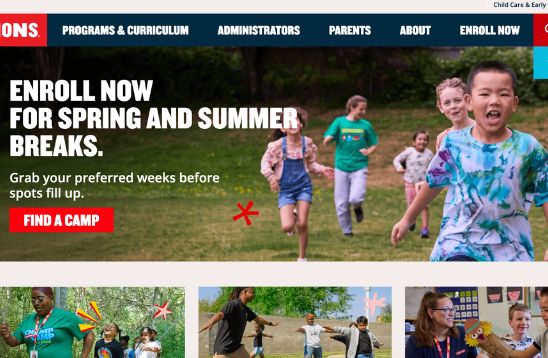
Champions is owned by KinderCare Learning Companies and operates before and after-school programs that convert to full-day summer camps called "Champ Camp" as an extension of their year-round school-based programs.
Summer Camp Details
How it works: Camps run Monday through Friday in one-week sessions throughout summer at elementary and middle schools. Champions also offers outdoor camps at select locations like university campuses and nature reserves for a more adventure-focused experience.
Camp times: Standard camp runs 9:00 AM to 4:00 PM, with no-fee extended care from 7:30 AM to 9:00 AM and 4:00 PM to 5:30 PM (included in cost at most locations).
Grade levels/ages: Serves children ages 5-12 (typically grades K-6).
Summer Camp Activities
Champions' weekly activities include indoor and outdoor play, arts and crafts, hands-on projects, sports, and two field trips to destinations like museums, zoos, and water parks. Their outdoor summer camp version adds activities like kayaking, rock climbing, hiking, and wilderness survival.
How much is Champions summer camp?
Camp pricing varies by location, typically upwards of $550 per week.
Benefits and Drawbacks
Benefits: Great for students who want more physical play and outdoor-based activities. Good for students who are interested in wildlife or the great outdoors, with field trip destinations like museums, zoos, and water parks.
Drawbacks: Focuses more heavily on play-based activities with no dedicated focus on STEM subjects. Project-based activities are similar to what you would find at other day camps. Based on parent reviews, STEM curriculum seems to be advertised as included, but activities are still general enrichment rather than unique skill-building. Some employee and parent reviews mention staffing or management challenges at certain locations, which may affect the overall camp experience.
Parent Rating: Approximately 2.7–4.5 stars depending on location.
Best for: Families that want outdoor and play-based experiences for their students.
6. Galileo
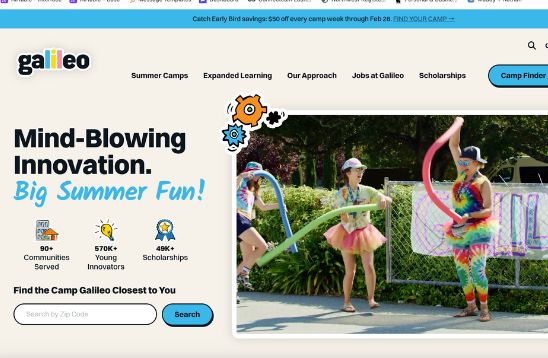
Camp Galileo is a well-established, innovation-focused summer camp that operates locations across Northern California, Southern California, Chicago, Denver, and Seattle.
Summer Camp Details
How it works: Camps run Monday through Friday in one-week sessions with rotating weekly themes. Each theme includes hands-on STEAM projects, collaborative design challenges, and traditional camp activities. Camps are hosted at elementary schools and partner facilities throughout their service regions.
Camp times: Core camp hours are 9:00 AM to 3:00 PM, with optional extended care from 8:00 AM to 9:00 AM and 3:00 PM to 6:00 PM. Camps are closed on Juneteenth (June 19) and Independence Day (July 4).
Grade levels/ages: Serves kindergarten through 8th grade.
Summer Camp Activities
Galileo emphasizes STEAM projects alongside activities like DIY engineering builds, outdoor games and songs, face painting, pie throwing, and other team-based activities.
How much is Camp Galileo?
Camp costs start at around $525 per week, depending on the region, with an additional materials fee of approximately $100 for select activities.
Benefits and Drawbacks
Benefits: Projects are more substantial than typical day camp crafts, and students take home functional creations. Staff are generally well-trained college students and educators. The program is well organized with clear structure and routines. Extended care is available, and scholarships help improve affordability.
Drawbacks: Pricing is on the higher end compared to other camps. Some parent reviews mention occasional challenges supporting younger campers during drop-off and meal times. Program quality can vary by location and staffing. A few parents note crowded check-in periods or occasional communication issues.
Parent Rating: Approximately 3.5–4.7 stars, with some variation by location.
Best for: Families looking for a STEAM-focused camp with hands-on, take-home projects.
7. Invention

Camp Invention is run by the National Inventors Hall of Fame, a nonprofit organization. The program operates nationwide at elementary schools and community centers. Seasonal instructors are hired locally and follow a standardized curriculum supported by pre-recorded videos and facilitator guides.
Summer Camp Details
How it works: One-week sessions are held at elementary schools and community centers. The organization provides all curriculum, lesson plans, and materials, which instructors follow throughout the week. Students rotate through different classroom-based activities each day.
Camp times: Varies by location, typically full-day programs. Some locations offer before and after care. Check individual sites for specific hours.
Grade levels/ages: Serves students entering kindergarten through 6th grade. A Leaders-in-Training program is available for 7th–9th graders, along with a Leadership Intern Program for high school and college students.
Summer Camp Activities
Students participate in hands-on STEM activities, engineering challenges, and entrepreneurship projects, including activities like designing small boats or creating simple inventions. Team games and outdoor play are also included. Based on parent reviews, many projects use basic materials such as cardboard, paper cups, and straws, with lessons delivered primarily through scripted videos.
How much is Camp Invention?
Pricing typically starts around $375 per week, with costs varying by location.
Benefits and Drawbacks
Benefits: Strong focus on STEM-themed activities compared to many traditional day camps, with widespread availability across the country. The standardized curriculum allows camps to operate consistently across locations, and instructional videos support local instructors. Activities emphasize hands-on building using everyday materials.
Drawbacks: Program quality can vary by location and instructor due to reliance on seasonal staff following a scripted curriculum. Some parent reviews describe projects as fragile or overly craft-focused, noting that activities may feel more like guided crafts than in-depth STEM instruction. A few reviewers felt the hands-on experience did not fully match expectations set by marketing.
Parent Rating: Approximately 2.0–3.7 stars, with mixed feedback across locations.
Best for: Families looking for a more affordable, locally available summer camp where kids can explore basic STEM concepts through guided projects, especially if the local site has strong reviews and experienced instructors.
Choosing a summer camp: Parent checklist
Before registering for a summer camp, start by locking in the basics.
Here’s a simple checklist to help guide your decision:
- Logistics
- Value assessment
- Activities and curriculum
- Staff qualifications
Logistics
What does a typical day look like hour by hour? How much time is spent on hands-on activities versus instruction? Consider how the commute fits into your daily routine. Camp schedules vary widely, from half-day programs to full-day options with extended care. Make sure you understand drop-off and pick-up procedures and whether before or after camp coverage is available. Choose a schedule that works for your family.
Value Assessment
Cost is an important factor, but look beyond the sticker price. Understand what is included in the tuition. Price alone does not tell you whether a camp is a good value. Are materials and supplies included, or are there extra fees for special activities? Some camps have strict refund policies, while others offer more flexibility if plans change. The cost should align with the quality of instruction and programming your child receives.
Activities and Curriculum
Do not rely solely on marketing language. If project descriptions sound overly broad or vague, that is often what you will get. Many general day camps aim to appeal to a wide audience and use popular terms like STEM, robotics, space, or art to attract families. In practice, these activities may be surface-level and not as in-depth as expected. Look for camps that clearly outline what students will actually do and avoid programs that overpromise and underdeliver.
Staff Qualifications
A summer camp is only as strong as the team running it. Even the best equipment falls short without well-trained and experienced staff. Find out whether instructors are returning staff with multiple years of experience or newly hired seasonal employees. Camps that rely heavily on seasonal staff may see inconsistencies in instruction as new hires learn on the job. That may be acceptable for general childcare camps, but for educational programs like STEM, instructor experience plays a major role in the quality of the student experience.
Choosing a summer camp: Student needs
Beyond logistics and cost, the best summer camp choice depends on your child’s individual needs, interests, and learning style. Not every camp is a good fit for every student, even if it looks great on paper.
Learning Style and Interests
Consider how your child learns best. Some students thrive in structured, project-based environments, while others prefer open-ended play and social activities. If your child is genuinely interested in science, engineering, or building things, a focused STEM camp may be more engaging than a general day camp. On the other hand, students who enjoy variety and movement may benefit from camps with a mix of sports, crafts, and outdoor play.
Age and Maturity Level
Pay close attention to the camp’s age range and how activities are grouped. Camps that span wide age ranges often simplify activities to accommodate everyone. Younger students may need more guidance and supervision, while older students may want more challenge and independence. Look for programs that group students by age or grade to ensure activities are developmentally appropriate.
Experience Level
Some camps are designed for beginners, while others assume students already have experience with certain tools or concepts. Check whether projects are introductory or build progressively throughout the week. A camp that is too basic can feel boring, while one that moves too fast can be frustrating. The right camp should meet your child where they are and help them grow.
Social Comfort and Support
Think about how your child handles new environments. Some students are comfortable jumping into group settings, while others need more structure and support during transitions like drop-off or lunchtime. Ask how camps support younger or first-time campers and how instructors help students who may need extra encouragement.
Goals for the Summer
Finally, decide what you want your child to get out of the experience. Is the goal learning new skills, building confidence, staying active, or simply having fun while school is out? Clarifying this upfront makes it easier to choose a camp that aligns with your expectations and your child’s needs.
What types of summer camps are there?
Day Camps vs. Overnight Camps
Day camps are the most common option for elementary-aged children. Kids are dropped off in the morning and picked up in the afternoon, returning home each night. Most day camps run Monday through Friday, giving families weekends off. Full-day programs typically operate from around 9:00 AM to 3:00 PM, with many offering extended care before or after camp. Half-day camps are shorter, usually lasting three to four hours in the morning or afternoon, and can be a good fit for younger children or families that only need part-day coverage.
Overnight camps, often called sleepaway camps, involve children staying on-site for extended periods, typically one to several weeks. Campers live in cabins with counselors, share meals, and participate in activities throughout the day and evening. These camps place a strong emphasis on independence, social development, and building friendships, and are more common for older elementary and middle school students.
By Focus/Specialty
Summer camps come in nearly every format imaginable. General camps offer a mix of activities such as sports, arts and crafts, and outdoor games, giving kids variety and the chance to try different things each day or week.
STEM camps focus on science, technology, engineering, coding, and robotics. Quality can vary widely, so look for programs that offer meaningful hands-on engineering and engaging science experiments. This helps avoid camps that are mostly craft-based with a science theme added on.
Sports camps center around athletics, either teaching a single sport like soccer or basketball, or offering multi-sport experiences. These range from recreational to competitive skill-building.
Arts camps dive deep into creative pursuits like theater, music, dance, or visual arts. Kids might put on a performance at the end of the week or create portfolios of their work.
Academic camps focus on preventing summer learning loss through reading, writing, and math enrichment. These are popular with parents concerned about their child falling behind over the break.
Outdoor and adventure camps emphasize nature, with activities like hiking, camping skills, and environmental exploration. These camps prioritize time outside over structured indoor programming.
Best STEM Summer Camp
Choosing a summer camp is a lot like choosing a place to eat. A restaurant that serves pizza, sushi, barbecue, and burgers might sound appealing, but if you are craving truly great sushi, it often falls short. Trying to do everything usually means nothing is done exceptionally well.
The same idea applies to summer camps. Narrowing down your student’s interests and choosing a camp that specializes in those areas often leads to a better experience. If they want to explore something new later on, that is always an option for another summer.
If your student is interested in building and programming robots, designing and launching rockets, exploring chemistry through hands-on experiments, or diving deeper into real-world STEM projects, take a look at All Things Science. Our week-long summer camps serve students ages 5 to 14 and focus on daily science experiments and engineering projects led by experienced instructors.
If you are looking for a summer camp that goes beyond surface-level activities and gives students meaningful STEM experiences, this may be the right fit for your family.
Summer Camps FAQ
What is summer camp?
Summer camp is a supervised program where children participate in recreational, educational, and social activities during school summer break. Camps can be day programs or overnight, ranging from general recreation to specialized focus areas like sports, arts, or STEM.
How much does summer camp cost?
Summer camp costs vary widely. Day camps typically range from $50-$400 per week, while specialty camps can cost $200-$500+ per week. Overnight camps are significantly more expensive, often $1,000-$2,000 per week. Costs depend on location, program type, and included amenities.
How long is summer camp?
Most summer camps run in one-week sessions, Monday through Friday. Some offer extended multi-week programs or full summer enrollment (8-10 weeks). Daily hours typically run 8:00 AM to 4:00 PM for core programming, with extended care available.
Is summer camp tax deductible?
Day camp expenses may qualify for the Child and Dependent Care Tax Credit if the camp allows you to work. However, overnight camp costs do not qualify. You can also use a Dependent Care FSA to pay for day camp with pre-tax dollars.
Can I use Dependent Care FSA for summer camp?
Yes, you can use Dependent Care FSA funds for day camp expenses that allow you or your spouse to work. This includes full-day and half-day programs. Overnight camps do not qualify for FSA reimbursement.
When does summer camp start?
Most summer camps begin in early to mid-June, shortly after schools dismiss for summer break, and run through mid-August before the new school year starts. Registration typically opens 3-6 months in advance.
What do you do at summer camp?
Activities vary by camp type but typically include outdoor games, sports, swimming, arts and crafts, team-building activities, and field trips. Specialty camps focus on specific skills like coding, science experiments, theater, or athletics.
What should I pack for summer camp?
Essential items include a water bottle, sunscreen, lunch (if not provided), extra clothes, closed-toe shoes, and any required gear for specific activities. Label everything with your child's name. Check your camp's specific packing list for additional requirements.
Is my kid ready for summer camp?
Most children are ready for day camp starting around age 5-6 (kindergarten). Look for signs like your child's ability to follow instructions, separate from parents comfortably, use the bathroom independently, and interact with peers. Start with shorter sessions if you're unsure.
Hands-on STEM for parents and schools
Give your students access to great after-school STEM programs year-round
Get started ➔


.jpg)
Take a Look at our Featured Articles
Dive into the vibrant world of STEM through articles from your favorite scientists and engineers, all in one place.



Join the 1000+ families enrolled in All Things Science
Tell us where to send you some free STEM resources today.


