
Blog
|
Learn
How To Start a Fundraiser: A Guide for Schools and Nonprofits
Learn how to start a fundraiser with clear steps, practical planning tips, and realistic ideas that work for schools, PTAs, and nonprofits.

On this page:
Starting a fundraiser often sounds straightforward until you are the one asked to run it. Many parents and school volunteers are given the task with little guidance, a short timeline, and real pressure to raise money that supports students.
The good news is that learning how to start a fundraiser does not require special experience or a large committee. With a clear goal, a simple plan, and a fundraiser that fits your school community, the process becomes much more manageable.
This guide walks through how to start a fundraiser step by step, from understanding the basics to choosing the right approach, setting goals, and organizing volunteers. Whether you are fundraising for a school, PTA, or nonprofit, it is designed to help you get started with confidence.
What is fundraising and how fundraisers work

Fundraising is the process of raising money to support a specific cause, project, or organization. In schools and nonprofits, fundraising is often used to pay for things that are not covered by regular budgets, such as classroom supplies, field trips, enrichment programs, or special events.
A fundraiser is the activity or campaign used to raise that money. This might be an event, an online donation drive, or a community based activity where supporters contribute in exchange for something, such as a service or experience.
Most fundraisers work in a similar way. A group sets a clear purpose, invites people to participate or donate, and collects funds over a defined period of time. After the fundraiser ends, the money is used for the stated purpose, and results are often shared with the community. When done well, fundraising can also help build stronger connections within your community.
How to start a fundraiser step by step
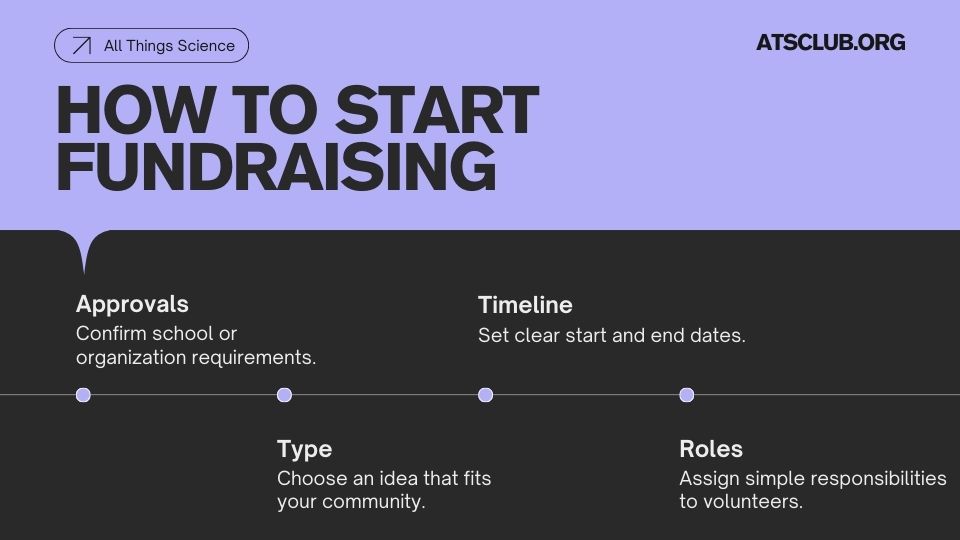
Starting a fundraiser works best when you keep the process simple and focused, especially if this is your first time organizing one. You do not need a complicated plan, but you do need clarity around what you are raising money for and how people can participate.
Step 1: Decide what you are raising money for
Before choosing a fundraiser, get clear on the purpose. Fundraisers are more successful when families understand exactly what the money will support, whether that is classroom supplies, a school event, or a specific program.
Step 2: Confirm approvals and guidelines
Check with your school, district, or organization to confirm any required approvals. Some schools have rules around fundraising timelines, payment handling, or approved platforms, and it is easier to address these early.
Step 3: Choose a fundraiser type that fits your community
Decide how you want to fundraise based on your available volunteers, timeline, and audience. This might be an event, an online fundraiser, or a donation based option that requires less coordination.
Step 4: Set a simple timeline
Choose clear start and end dates so families know when to act. Shorter fundraisers often perform better because they create urgency and are easier to promote.
Step 5: Assign a few clear roles
You do not need a large committee. Assign one person to manage communication, one to track money, and one to handle logistics. Clear ownership helps prevent confusion and burnout.
Once these basics are in place, promoting and running the fundraiser becomes much more manageable.
Organizing a fundraiser for a school or nonprofit

Organizing a fundraiser for a school or nonprofit involves a few extra steps, but it does not need to be complicated. The key is making sure expectations are clear and that the fundraiser fits within existing school or organizational guidelines.
Start by confirming who needs to approve the fundraiser and what policies apply. Schools and nonprofits often have rules around how funds are collected, which platforms can be used, and how money is deposited or reported. Taking time to understand these requirements upfront helps avoid delays later.
Next, create a simple plan that outlines the timeline, volunteer roles, and communication plan. This does not need to be formal, but it should answer basic questions about who is responsible for what and when tasks need to be completed. Clear roles and a realistic schedule make it easier for volunteers to participate without feeling overwhelmed.
Finally, think about how the fundraiser aligns with your broader goals. Fundraisers tend to perform better when families understand how the money supports students or programs they care about. Clear purpose and transparency are especially important when organizing a charity or nonprofit fundraiser, where trust plays a central role.
Choosing fundraiser ideas that work

The best fundraising ideas are the ones that fit your school community and volunteer capacity. Some schools do well with hands on events, while others prefer online or donation based fundraisers that require less coordination. There is no single right option, only what works best for your families and timeline.
If you are still deciding, it can help to compare different school fundraising ideas side by side, including event based, service based, and online options. Looking at examples can make it easier to choose a fundraiser that feels realistic to organize and effective for your goals.
Setting fundraiser donations and goals

When planning how to fundraise money, it helps to start with a clear and realistic goal. Instead of choosing a number at random, think about what the fundraiser is meant to support and how much funding is actually needed. Clear goals give families context and make it easier for them to decide to participate or donate.
Consider how people will contribute. Some fundraisers rely on direct donations, while others raise money through events or services. Both approaches work, but it is important to match your donation ask to your community. Smaller suggested amounts often feel more accessible and can add up quickly when participation is high.
Setting expectations also matters. Fundraisers are usually most successful when they feel achievable rather than overly ambitious. Clear communication around how the money will be raised and what success looks like helps everyone stay aligned and motivated throughout the fundraiser.
How to create and host a fundraiser

Creating a fundraiser starts with putting the basic structure in place. This includes choosing the format, confirming dates, and deciding how funds will be collected. Whether the fundraiser is an event, an online campaign, or a service based activity, simplicity makes it easier for volunteers and families to participate.
Hosting the fundraiser is about execution. Make sure roles are clearly assigned, supplies or tools are ready, and volunteers know what to expect. A simple plan for the day or duration of the fundraiser helps things run smoothly and reduces stress for everyone involved.
The most successful fundraisers feel organized but flexible. When expectations are clear and logistics are handled ahead of time, families can focus on supporting the cause rather than navigating confusion.
How to promote and market a fundraiser

Promoting a fundraiser is often where participation is won or lost. Even well planned fundraisers need clear, repeated communication so families know when to act and how to help.
Start with direct outreach. Sending fundraiser invitations through school email lists or parent groups helps reach families who are already connected to the school. Clear subject lines and simple instructions make it more likely people will open and respond.
Social platforms can also play a role, especially for online donations. Many schools choose to create a fundraiser on Facebook because it allows families to share the fundraiser with friends and extended family. Setting up a Facebook fundraiser is relatively simple, but it works best when paired with school emails and reminders so families understand the purpose and timeline.
No matter which platforms you use, consistency matters. Repeating the message across email, social media, and school communication channels helps keep the fundraiser visible without overwhelming families.
Types of fundraising
Group and event based fundraisers
Group and event based fundraisers bring families together around a shared activity or on a specific day. These fundraisers are usually organized by a central group, such as a PTSA, PTO, or school committee, with all donations or proceeds contributing toward one collective goal.
This approach works well for events like walkathons, car washes, and school nights, where participation happens at the same time and the focus is on community involvement. Group fundraisers tend to feel social and are often easier to manage because planning and promotion are centralized.
Peer to peer fundraisers
Peer to peer fundraisers allow individual students, parents, or supporters to set their own fundraising goals and share them with friends and family. Instead of everyone participating at once, contributions come in over a longer period of time and on each supporter’s own schedule.
This model works well when schools want to reach beyond their immediate community or offer individual incentives and rewards. Peer to peer fundraisers can increase total donations by tapping into personal networks while still supporting a shared school goal.
Fundraising with All Things Science

Running a fundraiser is one of the easiest ways for school groups to bring families together while supporting programs that benefit students.
Many schools partner with All Things Science to offer STEM labs, after school programs, and summer camps, using fundraising efforts to help students earn free admission and expand access across the school community.
How to start a fundraiser FAQ
What is fundraising and how does it work
Fundraising is the process of raising money to support a specific goal or cause. A fundraiser works by collecting donations or proceeds over a set period of time and using those funds for the stated purpose, such as supporting a school program or nonprofit initiative.
How do you start a fundraiser for a school
To start a fundraiser for a school, begin by defining a clear goal and confirming any required approvals. From there, choose a fundraiser type that fits your school community, set a timeline, and communicate clearly with families about how to participate.
What is the easiest way to fundraise
The easiest way to fundraise is often through donation based or low effort fundraisers. Online campaigns, restaurant nights, and service based fundraisers typically require less setup and fewer volunteers than large events.
How do you organize a fundraiser with volunteers
Organizing a fundraiser with volunteers works best when roles are clearly defined. Assign specific responsibilities, keep the plan simple, and communicate expectations early so volunteers know how they can help without feeling overwhelmed.
How does peer to peer fundraising work
Peer to peer fundraising allows individuals to raise money on behalf of a school or nonprofit by sharing their own fundraising pages. Supporters collect donations from their personal networks, which can help expand reach beyond the immediate school community.
Can you start a fundraiser on Facebook for a school
Yes, many schools use Facebook to run online fundraisers. A Facebook fundraiser allows families to donate and share the campaign with friends and extended family, making it a useful option for online and peer to peer fundraising efforts.
Hands-on STEM for parents and schools
Give your students access to great after-school STEM programs year-round
Get started ➔



.jpg)
Take a Look at our Featured Articles
Dive into the vibrant world of STEM through articles from your favorite scientists and engineers, all in one place.




Join the 1000+ families enrolled in All Things Science
Tell us where to send you some free STEM resources today.


