
Blog
|
Learn
What Is a Paraprofessional? Here's What You Need Know
Discover what paraprofessionals do, the different types of support roles they fill in schools, and how to start a meaningful career making a difference in students’ lives.
On this page:
If you've ever wondered about the dedicated professionals who work alongside teachers in classrooms, you're in the right place. Paraprofessionals are essential members of school teams who provide crucial support to both teachers and students. Whether you're considering this as a career path or simply curious about the role, this guide will walk you through everything you need to know about becoming a paraprofessional and what the job entails.
What Is a Paraprofessional?

A paraprofessional is a trained education support professional who works alongside licensed teachers to help students succeed in the classroom. You might also hear them called teacher aides, instructional assistants, or educational assistants. These titles all describe the same role in a school setting.
These professionals work in various educational settings, from elementary through high school, providing hands-on support that helps create more effective learning environments. While general paraprofessionals work with all students, special education paraprofessionals focus specifically on supporting students with disabilities or special needs.
Think of paraprofessionals as the bridge between teachers and students. They provide the individualized attention and support that helps every student reach their potential, working under the supervision of certified teachers who guide the overall curriculum and instruction.
What Does a Paraprofessional Do?
On any given day, a paraprofessional's work centers on supporting student learning and helping teachers manage their classrooms effectively. The role is dynamic and varies based on the specific assignment and grade level.
Typical daily activities include assisting with instructional activities, providing one-on-one or small group instruction to students who need extra help, supervising students in classrooms, cafeterias, playgrounds, and during transitions, and helping implement individualized education programs (IEPs) for students with special needs.
Special education paraprofessionals take on additional responsibilities working with students who have learning disabilities, physical disabilities, behavioral challenges, or other special needs. They might help these students with daily living skills, mobility assistance, communication support, and behavioral interventions.
Beyond academics, paraprofessionals help create positive classroom environments, support students' social and emotional development, and serve as an important connection between school and home for many families.
Types of Paraprofessionals
Paraprofessional roles vary depending on the educational setting and student population. Here are the main types:
General Education Paraprofessionals work in regular classrooms, supporting teachers with instructional tasks, small group activities, and classroom management across all grade levels.
Special Education Paraprofessionals support students with IEPs, working with those who have learning disabilities, autism, physical disabilities, or behavioral challenges. This role often requires additional training.
Bilingual/ESL Paraprofessionals assist students learning English as a second language, serving as cultural bridges and providing language support.
One-on-One Paraprofessionals work exclusively with a single student who requires intensive support due to significant disabilities or medical needs.
Substitute Paraprofessionals fill in when regular staff are absent, requiring flexibility and the ability to adapt quickly to different classrooms.
Other specialized roles include library media paraprofessionals and instructional technology paraprofessionals who support specific programs within schools.
Paraprofessional Duties and Responsibilities

The day-to-day responsibilities of a paraprofessional are diverse and meaningful. Here's what you can expect:
Instructional Support
- Assisting with lesson implementation and reinforcement
- Working with individual students or small groups on academic skills
- Preparing and organizing classroom materials and resources
- Supporting students with homework completion and study skills
Classroom Management
- Supervising students during lunch, recess, and transitions
- Monitoring student behavior and helping implement behavior strategies
- Maintaining a safe, organized learning environment
- Managing classroom technology and equipment
Special Education Support (for those working in special ed)
- Assisting students with personal care needs when necessary
- Implementing specialized instructional strategies
- Collecting data on student progress and behavior
- Supporting communication and using assistive technology
Administrative Tasks
- Helping with attendance and record-keeping
- Preparing materials and making copies
- Assisting with assessment administration
- Communicating with parents and families as directed
Remember, all these duties are performed under the supervision of a licensed teacher, who maintains responsibility for curriculum and instruction.
Paraprofessional Requirements
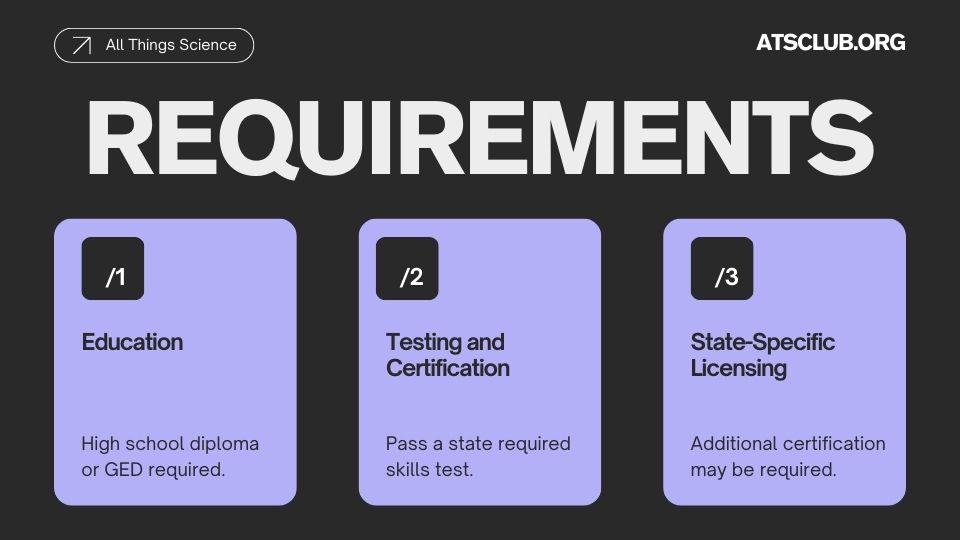
The requirements to become a paraprofessional vary by state and school district, but here are the general standards you'll need to meet:
Education
Most positions require at least a high school diploma or GED. Some districts prefer or require some college coursework or an associate's degree, but a bachelor's degree is typically not necessary.
Testing and Certification
Many states require you to pass a standardized assessment that measures your knowledge in reading, writing, and mathematics. The most common tests are the ParaPro Assessment (offered by ETS) or state-specific exams like the GACE in Georgia. The difficulty varies by individual, but practice tests are widely available online to help you prepare.
Testing centers are located throughout each state. Check with your local school district or state education department for locations near you.
State-Specific Licensing
Some states require specific certification or licensure. For example:
- Illinois has specific requirements for obtaining a paraprofessional license
- Texas has its own certification process
- New York (including NYC) has particular requirements for DOE paraprofessionals
Many states now offer online certification options to make the process more accessible.
Additional Requirements
- Background checks and fingerprinting
- TB testing or health screenings
- Proof of work authorization
Always check your state's education department website for the most current and specific requirements in your area.
How to Become a Paraprofessional
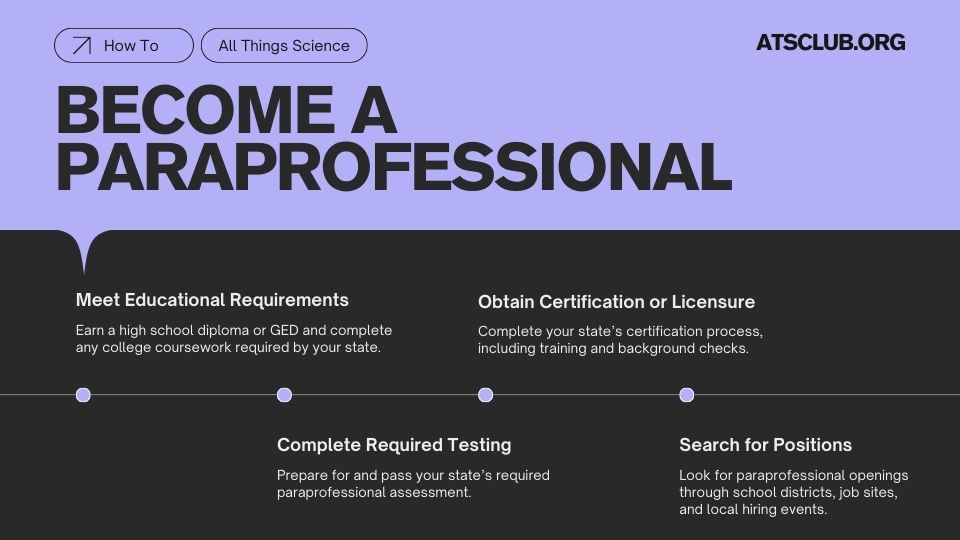
If you are interested in starting a career as a paraprofessional, here is a clear roadmap to get started:
Step 1: Meet Educational Requirements
- Earn your high school diploma or GED
- Consider completing some college coursework if required in your state
Step 2: Complete Required Testing
- Prepare using free practice tests available online
- Register for and pass your state's required assessment
- Contact your state education department for testing locations and registration
Step 3: Obtain Certification or Licensure
- Research your specific state requirements
- Complete any required training programs or coursework
- Submit applications and undergo background checks
Each state has its own process, so be sure to check with your state's education department for detailed requirements. Whether you're in New York, Illinois, Texas, Florida, Georgia, or elsewhere, the basic steps remain similar, but the specifics will vary.
Step 4: Search for Positions
- Check school district websites for job openings
- Use job search sites to find positions in your area
- Attend local job fairs and hiring events
- Consider starting as a substitute to gain experience
Looking Ahead
Some paraprofessionals eventually pursue teaching careers through paraprofessional-to-teacher programs, which provide pathways to become a licensed teacher while continuing to work.
How Much Do Paraprofessionals Make?
Salary is naturally an important consideration when exploring this career. Paraprofessional pay varies significantly based on several factors including location, experience, education level, and the specific school district.
National Average
Across the United States, paraprofessionals typically earn between $25,000 and $35,000 annually, though this range varies widely depending on where you work. On an hourly basis, this translates to approximately $12 to $17 per hour, with the national average hovering around $14 to $15 per hour.
Location Matters
Salaries tend to be higher in urban areas and districts with higher costs of living. For example:
- California: Southern California districts (Los Angeles, Orange County, San Diego) and the Bay Area typically pay $18-$25 per hour
- New York City: NYC DOE paraprofessionals generally earn between $15-$22 per hour, depending on experience
- Georgia: Salaries vary by district but generally fall within the national average
- Texas: Pay rates differ across the state's many districts
- Florida: Compensation varies by county and district
What Affects Your Pay
Several factors can influence your earning potential:
- Years of experience in the role
- Educational attainment beyond minimum requirements
- Specialized certifications or training
- Working with special education populations
- The specific district's pay scale
Benefits and Summer Pay
Many paraprofessionals receive benefits including health insurance, retirement plans, paid leave, and professional development opportunities. However, benefit packages vary by district.
One common question is about summer employment. This depends on your district’s structure. Some paraprofessionals work only during the school year (typically 9-10 months) and need to budget accordingly, while others have 12-month contracts. Some paraprofessionals may be eligible for unemployment benefits during summer months, depending on their state and employment situation.
Substitute paraprofessionals are typically paid a daily rate rather than an annual salary, and their schedules vary based on need.
Getting started with STEM education

Interested in teaching STEM education in a hands-on, classroom based setting? All Things Science works with schools to deliver engaging STEM programs and is always looking for educators who enjoy working directly with students.
Paraprofessional FAQ
What's the difference between a paraprofessional and a teacher?
Paraprofessionals are support staff who work under the supervision of licensed teachers. While they assist with instruction, teachers are responsible for lesson planning, curriculum, and overall classroom management.
Do I need a college degree to become a paraprofessional?
Generally no—most positions require a high school diploma or GED. Some districts prefer candidates with some college coursework, but a bachelor's degree is typically not required.
What does the paraprofessional test cover?
The assessment typically includes sections on reading, writing, and mathematics skills, plus questions about how to assist with instruction in these areas.
How is special education different?
Special education paraprofessionals work specifically with students who have disabilities or special needs, helping implement individualized education plans and providing specialized support.
When is National Paraprofessional Day?
Paraprofessional Appreciation Day is typically celebrated in April, though exact dates may vary by state and district. Many schools recognize their paraprofessionals with special events and appreciation gifts.
What benefits do paraprofessionals receive?
Many paraprofessionals receive health insurance, retirement plans, paid leave, and professional development opportunities, though packages vary by district and employment status.
Can I become a teacher after working as a paraprofessional?
Yes! Many paraprofessionals pursue teaching careers through paraprofessional-to-teacher programs, which allow you to work toward teacher certification while employed.
Hands-on STEM for parents and schools
Give your students access to great after-school STEM programs year-round
Get started ➔


.jpg)
Take a Look at our Featured Articles
Dive into the vibrant world of STEM through articles from your favorite scientists and engineers, all in one place.


Join the 1000+ families enrolled in All Things Science
Tell us where to send you some free STEM resources today.


